Nature-based Solutions for Disaster Risk Reduction: A Comprehensive Framework
Nature-based Solutions represent a paradigm shift in how we approach disaster risk reduction, offering a sustainable complement to traditional engineering that delivers multiple environmental and social co-benefits alongside flood protection.
1. Introduction: Defining NbS
Nature-based Solutions (NbS) refer to a strategic disaster risk reduction (DRR) approach that utilizes natural processes and sustainable ecosystems. These measures are not intended to replace engineering but to complement it. They can be categorized into:
- Purely “Green” Measures: Utilizing only natural ecosystems.
- Hybrid Solutions: A combination of “green” and “grey” (engineered) elements, such as reservoirs, flood bunds, pumps, and water treatment plants.
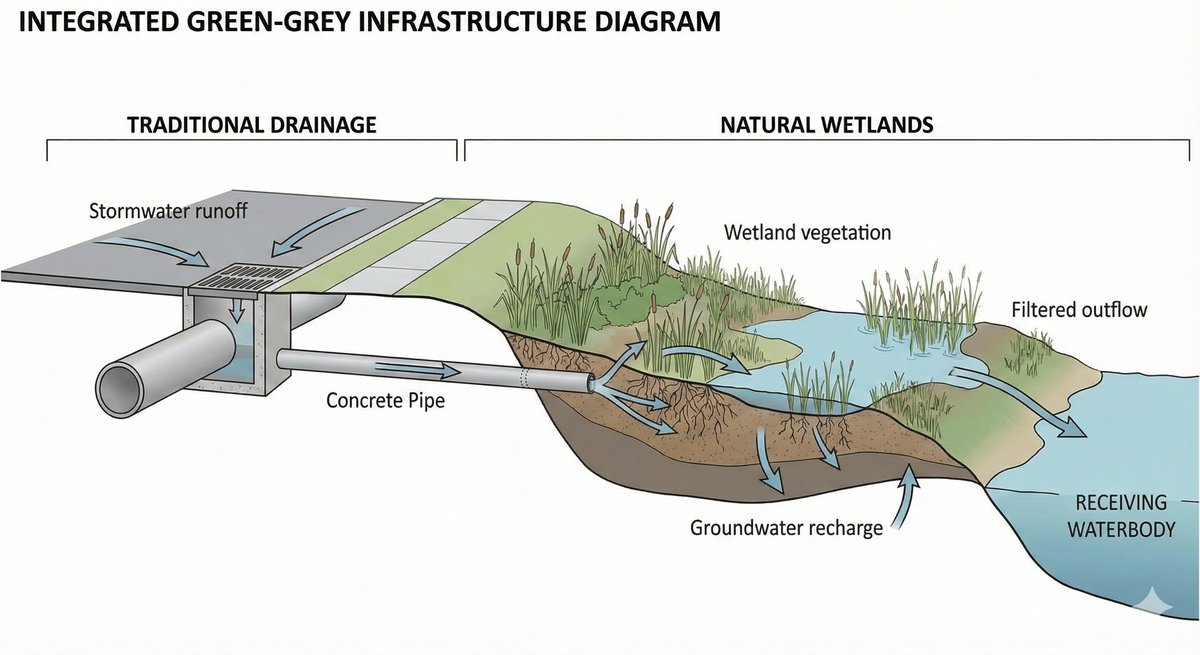 Figure 1: Conceptual diagram showing the integration of natural wetlands with traditional drainage infrastructure
2. The Value Proposition: Why NbS?
NbS is widely recognized as a “Win-Win” or “No-regret” approach. Unlike traditional infrastructure, which often serves a single purpose (e.g., a sea wall only blocks waves), NbS provides a suite of environmental and social co-benefits:
- Disaster Mitigation: Effective reduction of flood, landslide, and coastal erosion risks.
- Aesthetics & Urban Cooling: Enhancement of the local landscape and reduction of the heat island effect.
- Biodiversity: Creation and protection of habitats for flora and fauna.
- Carbon Sequestration: Direct contribution to climate change mitigation by capturing atmospheric CO₂.
- Economic Efficiency: Research indicates that NbS often yields a higher Benefit-Cost Ratio (BCR) than purely grey interventions due to lower long-term maintenance costs and high adaptability to changing climate conditions.
3. The Green-Grey Infrastructure Spectrum
Choosing the right solution requires evaluating where a project sits on the infrastructure continuum.
Table 1: Comparative Analysis of Infrastructure Types
| Feature | Green Infrastructure | Hybrid (Green-Grey) | Grey Infrastructure |
|---|---|---|---|
| Examples | Wetland restoration, forest conservation | Riparian buffers with stone pitching, bioswales | Concrete dams, sea walls, drainage pipes |
| Primary Goal | Ecosystem health & DRR | Balanced protection & sustainability | High-certainty risk shielding |
| Flexibility | High (Self-healing/Adaptive) | Moderate | Low (Static) |
| Maintenance | Low (Natural growth) | Moderate | High (Structural repairs) |
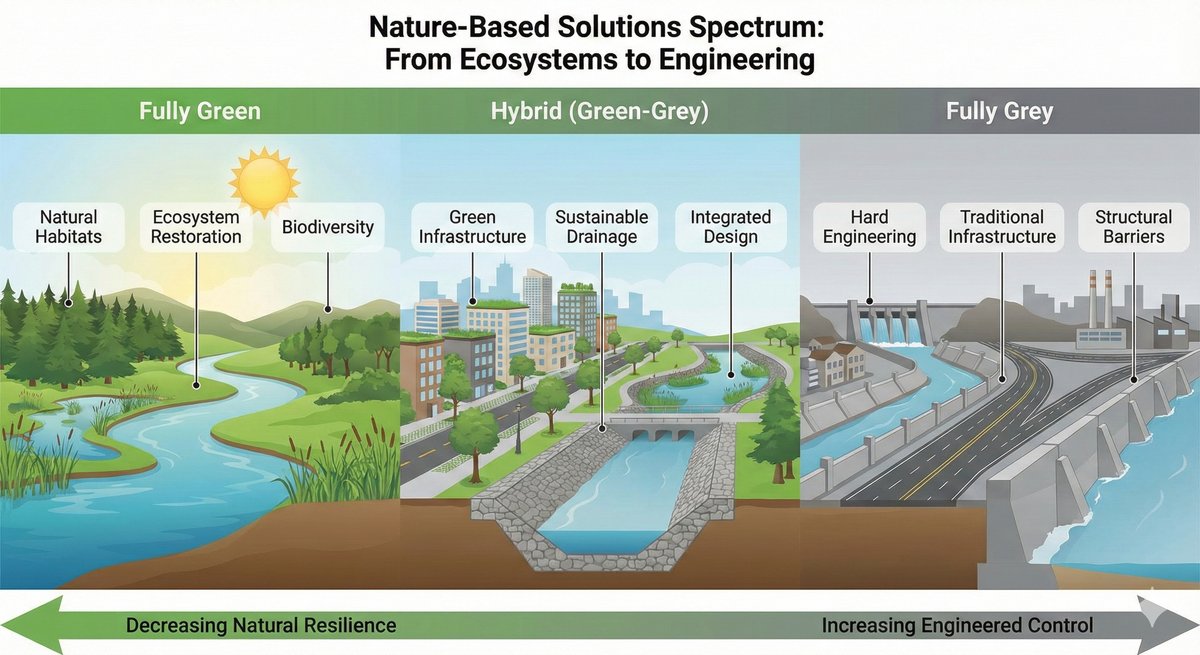 Figure 2: An infographic illustrating the spectrum from fully green to hybrid to fully grey solutions
4. General Barriers to Implementation
Despite the clear advantages, NbS faces several systemic hurdles that must be addressed:
The Evidence Gap
There is often a significant time lag before natural measures reach full functional capacity (e.g., a newly planted mangrove forest takes years to provide storm surge protection). This makes it harder to quantify immediate benefits.
Complexity & Lack of Standardization
Unlike concrete structures, which have standardized design codes (e.g., Eurocodes or ASTM), NbS requires site-specific, rigorous technical assessments. It demands high levels of multi-stakeholder collaboration.
The Human Barrier
Stakeholders and residents in high-risk areas are often skeptical of unconventional measures. There is a common misperception that “natural” means “weaker,” leading to a preference for the perceived solidity of concrete.
5. Conclusion
NbS represents a sustainable, “nature-first” approach to disaster mitigation. While its long-term resilience is currently undervalued in public and political spheres, it is becoming an essential tool in the face of increasing climate vulnerability. To move forward, we must systematically assess performance data and communicate these findings to educate the public and secure investment for future-proof infrastructure.